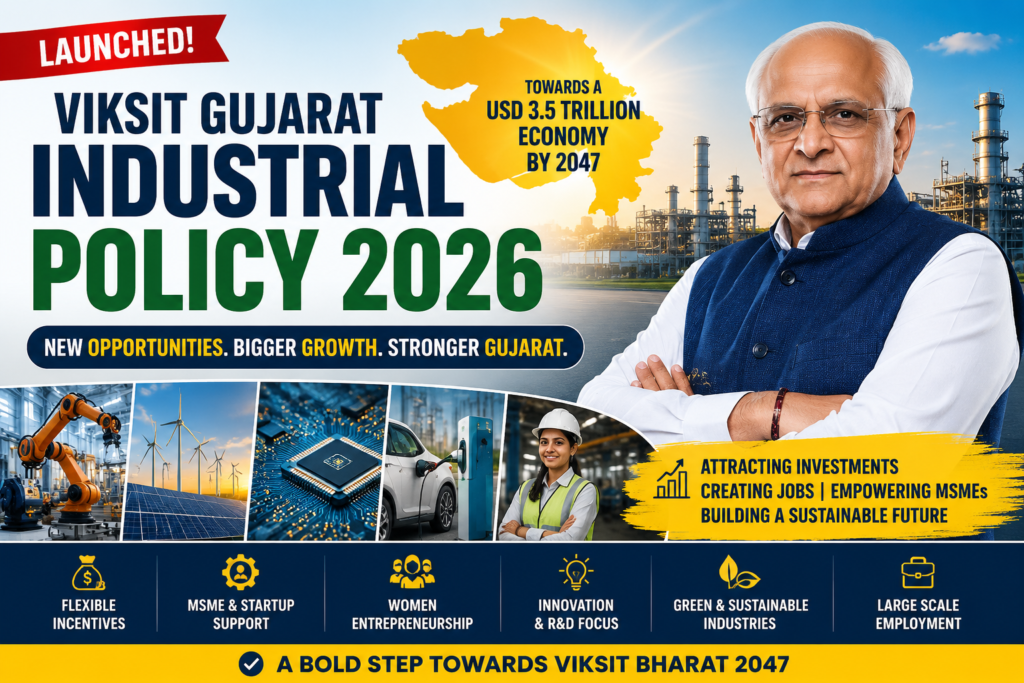
📌 Quick Summary: The Gujarat Government launched the Gujarat Industrial Policy 2026 on June 15, 2026. This landmark policy aims to make Gujarat a global manufacturing and innovation hub, boost MSME growth, attract FDI, and create large-scale employment across the state.
- What is Gujarat Industrial Policy 2026? {#what-is}
- Key Objectives of Viksit Gujarat Industrial Policy 2026 {#objectives}
- Gujarat’s Industrial Growth: Current Status {#current-status}
- Top Highlights of Gujarat Industrial Policy 2026 {#highlights}
- MSME Benefits Under Gujarat Industrial Policy 2026 {#msme}
- Project T.H.R.I.V.E – Urban Decongestion Initiative {#thrive}
- Focus on Women Entrepreneurship {#women}
- Innovation and R&D – Gujarat Research & Innovation Park {#rd}
- Green Growth and Sustainable Industrial Development {#green}
- Flexible Incentive Framework for Investors {#incentives}
- Sector-Specific Focus Areas {#sectors}
- How Does Gujarat Industrial Policy 2026 Benefit Job Seekers? {#jobs}
- Conclusion
- Frequently Asked Questions (FAQs)
What is Gujarat Industrial Policy 2026? {#what-is}
The Viksit Gujarat Industrial Policy 2026 is a comprehensive, future-focused industrial framework launched by the Government of Gujarat on June 15, 2026. Chief Minister Bhupendra Patel unveiled the policy at Mahatma Mandir, Gandhinagar, in the presence of Deputy Chief Minister Harsh Sanghavi.
This policy is designed to position Gujarat as a global powerhouse for advanced manufacturing, innovation, and sustainable industrial growth. It directly supports the national vision of Viksit Bharat 2047 and the mission of Aatmanirbhar Bharat, translating them into a robust, state-level action framework.
The Gujarat Industrial Policy 2026 replaces earlier frameworks and introduces first-of-its-kind investor-friendly mechanisms that allow industries to customise their incentive package — a major shift from the one-size-fits-all approach of previous policies.
🇮🇳 ગુજરાતી માં જાણો: વિકસિત ગુજરાત ઔદ્યોગિક નીતિ 2026 એ ગુજરાત સરકાર દ્વારા 15 જૂન 2026ના રોજ ગાંધીનગરના મહાત્મા મંદિર ખાતે જાહેર કરવામાં આવી છે. મુખ્યમંત્રી શ્રી ભૂપેન્દ્ર પટેલ અને નાયબ મુખ્યમંત્રી શ્રી હર્ષ સંઘવીની ઉપસ્થિતિમાં આ ઐતિહાસિક નીતિ જાહેર કરવામાં આવી. આ નીતિ ગુજરાતને વૈશ્વિક ઉત્પાદન અને ઇનોવેશન હબ બનાવવા, MSME ઉદ્યોગોને ટેકો આપવા, FDI આકર્ષવા અને મોટા પ્રમાણમાં રોજગારીનું સર્જન કરવા માટે ઘડવામાં આવી છે. વિકસિત ભારત 2047ના રાષ્ટ્રીય લક્ષ્યને સાકાર કરવા માટે ગુજરાત આ નીતિ દ્વારા અગ્ર ભૂમિકા ભજવશે.
Key Objectives of Viksit Gujarat Industrial Policy 2026 {#objectives}
The policy is built on several core pillars:
- Accelerate Gujarat’s journey to become a USD 3.5 trillion economy by 2047
- Attract next-generation, high-value investments from India and abroad
- Create quality employment opportunities at scale across all regions
- Strengthen Gujarat’s integration into global value chains
- Promote balanced regional development across less-developed talukas
- Empower MSMEs, startups, and women entrepreneurs
- Foster a knowledge-driven, technology-intensive economy
- Ensure green and sustainable industrial growth
Gujarat’s Industrial Growth: Current Status {#current-status}
Before exploring the new policy, it is important to understand Gujarat’s existing industrial strength:
| Indicator | Data |
| Gujarat GDP | USD 329.70 billion |
| Share in India’s GDP | 8.2% |
| Foreign Direct Investment (FDI) by Dec 2025 | USD 60.6 billion |
| FDI in 2015-16 (for comparison) | USD 2.2 billion |
| Cumulative Investment since 2012 | Over ₹7 lakh crore |
| Target Economy Size by 2047 | USD 3.5 trillion |
Gujarat continues to lead India in manufacturing, infrastructure development, innovation, and Ease of Doing Business. The state’s ecosystem is anchored by landmark projects including GIFT City, Dholera Special Investment Region (SIR), and several world-class global industrial parks.
The launch of the Gujarat Industrial Policy 2026 comes at a time when Gujarat already contributes over 8.2% of India’s GDP — making it one of the most industrially significant states in the country.
Top Highlights of Gujarat Industrial Policy 2026 {#highlights}
Here is a quick overview of the most important features of the Gujarat Industrial Policy 2026:
1. Flexible Incentive Framework For the first time, Gujarat has introduced a customisable incentive model. Industries can choose from a combination of:
- Capital Subsidy
- Interest Subsidy
- Power Tariff Reimbursement
This flexibility allows businesses to align incentives with their specific financial and operational needs.
2. First-of-Its-Kind Investor-Friendly Design The policy framework is described as bold, transparent, and speedy — aimed at reducing bureaucratic delays and enhancing certainty for investors.
3. Focus on Advanced Manufacturing The policy targets key future sectors including green hydrogen, electric mobility (EV), aerospace, semiconductors, and Industry 4.0 technologies.
4. MSME Empowerment at Core MSMEs receive targeted support to help them scale, compete globally, and move up the value chain.
5. Women Entrepreneurship Support Special provisions have been made to lower barriers for women-led businesses, from ideation to scaling.
6. R&D and Innovation Ecosystem The policy aims to make Gujarat a global R&D hub through a dedicated Gujarat Research & Innovation Park.
7. Project T.H.R.I.V.E A breakthrough initiative to decongest urban areas by relocating industries to planned industrial parks.
8. Green and Circular Economy Focus Financial assistance for Common Environmental Infrastructure to support eco-friendly industrial development.
MSME Benefits Under Gujarat Industrial Policy 2026 {#msme}
One of the strongest aspects of the Gujarat Industrial Policy 2026 is its dedicated focus on Micro, Small, and Medium Enterprises (MSMEs). Here is what MSMEs can expect:
Incentive Range: MSMEs can avail 35% to 45% of their investment as incentives, with the exact percentage depending on the Taluka Category in which they operate. This tiered system is designed to encourage investment in less-developed and backward regions of Gujarat.
Flexible Incentive Choice: MSMEs can mix and match from:
- Capital Subsidy (direct cash support on capital expenditure)
- Interest Subsidy (reduction in loan repayment burden)
- Power Tariff Reimbursement (reduction in electricity costs)
Why This Matters: MSMEs are the backbone of Gujarat’s economy. By offering targeted, flexible incentives, the policy empowers small businesses to scale operations, adopt technology, and compete in global markets. This is expected to strengthen Gujarat’s position as one of India’s top MSME-friendly states.
For MSME owners in Gujarat — particularly in Surat (textiles, diamonds), Ahmedabad (chemicals, pharma), Rajkot (engineering), and Vadodara (petrochemicals) — this policy opens significant opportunities for expansion and modernisation.
🏭 MSME માટે ગુજરાતી માહિતી: ગુજરાત ઔદ્યોગિક નીતિ 2026 હેઠળ સૂક્ષ્મ, લઘુ અને મધ્યમ ઉદ્યોગો (MSME)ને 35% થી 45% સુધીની સબસિડી આપવામાં આવશે. ઉદ્યોગ જ્યાં સ્થાપિત થાય છે તે તાલુકાની શ્રેણી (Category) પ્રમાણે આ ટકાવારી નક્કી કરવામાં આવશે. ઉદ્યોગ સાહસિકો કેપિટલ સબસિડી, વ્યાજ સહાય (Interest Subsidy) અથવા વીજળી ટેરિફ રિઇમ્બર્સમેન્ટ — આ ત્રણ વિકલ્પોમાંથી તેમની જરૂરિયાત પ્રમાણે પસંદ કરી શકે છે. સુરત (ટેક્સટાઇલ, હીરા), અમદાવાદ (ફાર્મા, કેમિકલ), રાજકોટ (એન્જિનિયરિંગ) અને વડોદરા (પેટ્રોકેમિકલ)ના ઉદ્યોગ સાહસિકો માટે આ નીતિ ઘણી ઉપયોગી સાબિત થઈ શકે છે.
Project T.H.R.I.V.E – Urban Decongestion Initiative {#thrive}
One of the most unique and forward-looking features of the Viksit Gujarat Industrial Policy 2026 is Project T.H.R.I.V.E.
T.H.R.I.V.E is a strategic initiative to decongest urban areas by encouraging industries currently operating in crowded city zones to relocate to designated industrial parks and estates.
What industries get in return:
- Better infrastructure (roads, utilities, logistics)
- A cleaner environment
- Improved ease of living for workers
- Access to planned expansion space
Why it matters: Cities like Surat, Ahmedabad, and Rajkot have seen rapid industrial expansion that has strained urban infrastructure. Project T.H.R.I.V.E aims to bring order and sustainability to this growth, while also making these cities more liveable. Industries moving to GIDC estates will benefit from state-of-the-art facilities and planned ecosystems designed for Industry 4.0.
Focus on Women Entrepreneurship {#women}
The Gujarat Industrial Policy 2026 places a strong emphasis on inclusive growth through women entrepreneurship. Key provisions include:
- Lower barriers for women-led enterprises at every stage — from ideation to growth to scaling
- Capital Support for building secure, modern Working Women Hostels and Dormitories within or adjacent to manufacturing hubs and industrial estates
- Dedicated support schemes to bring more women into Gujarat’s industrial workforce
This aligns with the broader national goal of increasing women’s participation in the formal economy and supporting self-reliant women entrepreneurs across Gujarat.
👩💼 મહિલા ઉદ્યોગ સાહસિકો માટે: ગુજરાત ઔદ્યોગિક નીતિ 2026 મહિલા સશક્તિકરણ પ્રત્યે ઊંડી પ્રતિબદ્ધતા ધરાવે છે. મહિલા ઉદ્યોગ સાહસિકોને વ્યવસાય શરૂ કરવાથી લઈને વૃદ્ધિ કરવા સુધી દરેક તબક્કે સહાય આપવામાં આવશે. ઔદ્યોગિક વિસ્તારો નજીક Working Women Hostel અને Dormitory બાંધકામ માટે આર્થિક સહાય પૂરી પાડવામાં આવશે, જેથી ઉદ્યોગોમાં કામ કરતી મહિલા કર્મચારીઓ માટે સુરક્ષિત અને સ્વચ્છ રહેઠાણ ઉપલબ્ધ બને. ગુજરાત સરકારનો આ નિર્ણય **”આત્મનિર્ભર ગુજરાત”**ના નિર્માણ તરફ એક મહત્ત્વપૂર્ણ પગલું છે.
Innovation and R&D – Gujarat Research & Innovation Park {#rd}
A defining feature of the Gujarat Industrial Policy 2026 is its strong emphasis on Research & Development (R&D) and innovation-led growth. Key features:
Gujarat Research & Innovation Park (by GIDC): This dedicated park will be developed by the Gujarat Industrial Development Corporation (GIDC) to attract:
- Leading R&D companies
- Startups and deep-tech firms
- Technology-driven global players
The park will offer:
- State-of-the-art laboratories and testing facilities
- Pilot-scale and prototyping infrastructure
- Plug-and-play workspaces
- Shared research equipment
One-Stop Digital R&D Portal: A centralised digital portal will provide industries seamless access to all testing and R&D facilities across the state — reducing time and costs for businesses.
Special Incentives for R&D Centres: Companies setting up dedicated R&D centres in Gujarat will receive special incentives to attract global investment in research, development, and intellectual property creation.
Green Growth and Sustainable Industrial Development {#green}
In line with Prime Minister Narendra Modi’s vision for environmentally responsible development, the Gujarat Industrial Policy 2026 integrates green growth and circular economy principles:
- Financial assistance for setting up and upgrading Common Environmental Infrastructure
- Incentives for Industry 4.0 and Industry 5.0 compliant smart and sustainable factories
- Support for next-generation GIDC facilities with features like:
- Stormwater management systems
- Desalination plants
- Sustainable worker housing
- Promotion of green hydrogen, electric vehicles (EVs), and clean energy manufacturing
The policy sends a clear signal: Gujarat’s industrial future will be green, clean, and globally competitive.
Flexible Incentive Framework for Investors {#incentives}
The Gujarat Industrial Policy 2026 introduces what is being called the most investor-friendly framework the state has ever offered. Here is how it works:
For Large Industries:
- Special incentives for mega and ultra-mega projects
- Targeted support for sectors like green hydrogen, electric mobility, aerospace, and semiconductors
- Custom packages based on investment size, location, and employment generation
For MSMEs:
- 35% to 45% incentive on investment (based on Taluka Category)
- Freedom to choose any combination of capital subsidy, interest subsidy, or power tariff reimbursement
For R&D and Innovation Firms:
- Additional incentives for companies setting up R&D centres
- Access to Gujarat Research & Innovation Park infrastructure
For Less-Developed Regions:
- Higher incentive percentages for investments in backward and developing talukas to promote balanced regional growth
This multi-tiered, flexible approach is expected to set a new benchmark for Ease of Doing Business in India.
Sector-Specific Focus Areas {#sectors}
The Viksit Gujarat Industrial Policy 2026 targets the following high-priority sectors for special incentives and support:
- Green Hydrogen – Supporting clean fuel production and export
- Electric Mobility (EV) – Manufacturing of EVs, batteries, and components
- Aerospace and Defence – Leveraging Dholera SIR and existing aerospace clusters
- Semiconductors – Building on the Micron Technology ATMP facility at Sanand
- Advanced Manufacturing – Industry 4.0 and 5.0 technologies
- Pharmaceuticals and Chemicals – Strengthening existing clusters in Ankleshwar and Vadodara
- Textiles and Apparel – Supporting Gujarat’s world-famous textile manufacturing (Surat)
- IT/ITES and GCCs – Attracting Global Capability Centres to Gujarat
- Startups – Providing a nurturing ecosystem for new-age businesses
How Does Gujarat Industrial Policy 2026 Benefit Job Seekers? {#jobs}
While the Gujarat Industrial Policy 2026 is primarily a business and investment policy, it has direct implications for job seekers and the working population of Gujarat:
1. Large-Scale Job Creation By attracting new industries and supporting MSMEs, the policy is expected to generate lakhs of new employment opportunities across sectors.
2. Skill Development for Industry 4.0 The policy promotes a future-ready workforce through industry-academia partnerships, ensuring workers are trained for green tech, advanced manufacturing, and digital industries.
3. Better Working Conditions The development of modern worker housing, hostels, and dormitories near industrial estates will improve quality of life for industrial workers.
4. Opportunities for Youth in New Sectors Sectors like green hydrogen, semiconductors, EVs, and aerospace will require highly skilled youth — creating demand for engineers, technicians, and skilled tradespeople.
5. Women’s Employment With dedicated Working Women Hostels and support for women entrepreneurs, the policy creates a safer and more welcoming industrial environment for women workers and business owners.
For those looking for government jobs in Gujarat, the growth of industrial areas will also lead to increased demand for regulatory, administrative, and inspection staff in government departments like GIDC, Labour Department, Industries & Mines, and Environmental Departments.
Conclusion
📌 નિષ્કર્ષ – ગુજરાતી માં: વિકસિત ગુજરાત ઔદ્યોગિક નીતિ 2026 એ માત્ર ઉદ્યોગ નીતિ નથી — આ ગુજરાતના ઉજ્જ્વળ ભવિષ્યની એક સ્પષ્ટ દ્રષ્ટિ છે. ગ્રીન હાઇડ્રોજન, ઇલેક્ટ્રિક વ્હીકલ, સેમિકન્ડક્ટર, MSME, સ્ટાર્ટઅપ, R&D — આ તમામ ક્ષેત્રો માટે સ્પષ્ટ પ્રોત્સાહન ધરાવતી આ નીતિ ગુજરાતને 2047 સુધીમાં USD 3.5 ટ્રિલિયન ઇકોનોમી બનાવવાનું સ્વપ્ન સાકાર કરવામાં નિર્ણાયક ભૂમિકા ભજવશે. ગુજરાતના ઉદ્યોગ સાહસિકો, નોકરી ઇચ્છુક યુવાઓ, મહિલા ઉદ્યોગ સાહસિકો અને રોકાણકારો — તમામ માટે આ નીતિ નવી તકોનો દ્વાર ખોલે છે. GovernmentJobHub.com પર Gujarat Sarkari Yojana અને Gujarat Industrial Policy 2026 અંગેની તાજી માહિતી માટે અમારી સાથે જોડાયેલા રહો.
The Viksit Gujarat Industrial Policy 2026 is a landmark, visionary document that goes far beyond routine industrial incentives. It charts a comprehensive course for Gujarat to become a globally competitive, innovation-driven, inclusive, and sustainable industrial powerhouse.
Whether you are an MSME owner seeking expansion support, an investor looking at Gujarat’s thriving industrial ecosystem, a startup founder exploring R&D opportunities, or a job seeker tracking employment growth — this policy has something meaningful to offer.
Stay updated with the latest developments on Gujarat Sarkari Yojana and Gujarat Industrial Policy 2026 right here on GovernmentJobHub.com.
Disclaimer: This article is for informational purposes only, based on official government announcements. For the most accurate and updated information, please refer to the official Government of Gujarat website.
Frequently Asked Questions (FAQs)
Q1. When was Gujarat Industrial Policy 2026 launched?
The Viksit Gujarat Industrial Policy 2026 was officially launched on June 15, 2026, at Mahatma Mandir, Gandhinagar.
Q2. Who launched Gujarat Industrial Policy 2026?
It was launched by Chief Minister Bhupendra Patel, in the presence of Deputy Chief Minister Harsh Sanghavi.
Q3. What incentives do MSMEs get under Gujarat Industrial Policy 2026?
MSMEs can avail 35% to 45% of their investment as incentives (based on Taluka Category), choosing from capital subsidy, interest subsidy, or power tariff reimbursement.
Q4. What is Project T.H.R.I.V.E in Gujarat Industrial Policy 2026?
Project T.H.R.I.V.E is an initiative to relocate industries from congested urban areas to planned industrial parks and estates, offering better infrastructure, environment, and ease of living.
Q5. Which sectors get special incentives under Gujarat Industrial Policy 2026?
Green hydrogen, electric mobility, aerospace, semiconductors, IT/ITES, textiles, pharma, and advanced manufacturing are among the priority sectors.
Q6. What is the Gujarat Research & Innovation Park?
It is a new facility being developed by GIDC to attract R&D companies, startups, and tech firms, offering shared labs, prototyping infrastructure, and plug-and-play workspaces.
Q7. How does Gujarat Industrial Policy 2026 support women?
The policy includes provisions to lower barriers for women entrepreneurs, plus capital support for building Working Women Hostels near industrial hubs.
Q8. What is Gujarat’s economic target under this policy?
Gujarat aims to become a USD 3.5 trillion economy by 2047, contributing significantly to the Viksit Bharat 2047 mission.
Also Read:
- Gujarat Sarkari Yojana 2026 – Complete List
- Namo Lakshmi Yojana 2026 – Eligibility, Benefits & Application
- Gujarat Government Jobs 2026 – Latest Notifications
- PM Kisan 23rd Installment Date 2026 Gujarat: ₹2000 હપ્તાની સંભવિત તારીખ, સ્ટેટસ ચેક અને eKYC અપડેટ
1 thought on “Gujarat Industrial Policy 2026: Benefits, Incentives, Subsidies, Eligibility & Investment Opportunities”